Winter Symposium & Midyear Business Meeting: Meaningful Conversations, Lasting Impact
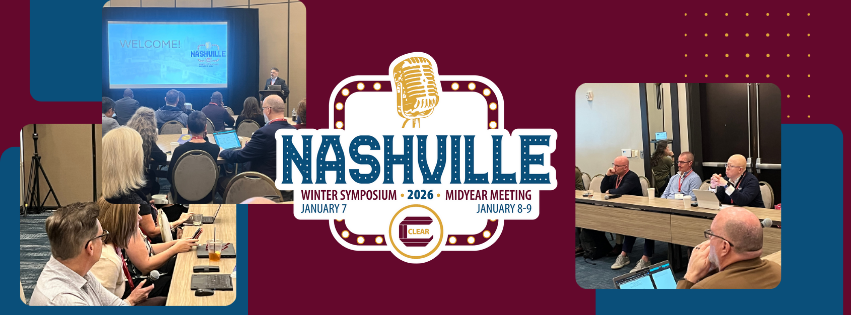
The 2026 CLEAR Winter Symposium and Midyear Business Meeting brought the regulatory community together January 7–9 in Nashville, Tennessee for three days of meaningful dialogue, collaboration, and progress.
The Winter Symposium featured compelling keynotes, cross-jurisdictional perspectives, and interactive sessions that explored how regulators can navigate complex conversations with empathy, data, and accountability while strengthening public trust and professional practice.
Held after the Symposium, the Midyear Business Meeting convened CLEAR’s committees and Board of Directors to advance association priorities, continue ongoing initiatives, and begin shaping the 2026 Annual Educational Conference, with working sessions across regulatory administration, enforcement, testing, education, international relations, and diversity, equity, and inclusion.
Winter Symposium Recap
CLEAR was delighted to welcome more than 50 regulators and CLEAR members from around the world to Nashville for the 2026 Winter Symposium, Difficult Conversations in Regulation, a dynamic one-day program focused on one of the most challenging aspects of regulatory work. The symposium opened with a keynote by Dr. William Cooper of Vanderbilt University, who shared a practical, data-informed framework for initiating and escalating difficult conversations grounded in empathy and accountability.
The following session balanced information and humor in their discussion of how regulators can approach difficult conversations. Dr. Rebecca Haw Allensworth closed out the morning with a presentation centered on the research and findings that informed her recent book, The Licensing Racket: How We Decide Who is Allowed to Work and Why It Goes Wrong, challenging attendees to confront the barriers present in regulation while maintaining a focus on public protection.
The afternoon kicked off with a facilitated roundtable where attendees discussed how regulators navigate high-stakes conversations across jurisdictions, address questions of regulatory effectiveness, and use difficult moments to build trust with stakeholders and the public. The program’s final presentation focused on how regulators can lean into difficult conversations to build trust and strengthen the efficacy of their work.
Overall feedback on the program from attendees spoke to the program’s practical relevance, strong facilitation, and opportunities for peer learning, reinforcing the value of candid dialogue in advancing effective and trusted regulation. Thank you again to our speakers, facilitators, and attendees for contributing to CLEAR’s first program of 2026!
Midyear Business Meeting Recap:
Following the Symposium, the Midyear Business Meeting brought CLEAR’s committees and Board together to review progress from the previous term, set priorities for the year ahead, and begin shaping the 2026 Annual Educational Conference.
Each committee engaged in thoughtful and timely discussions. Below are highlights from several committee meetings that may be of interest to CLEAR members.
DEI Committee:
The committee reviewed internal data provided by members and event attendees and discussed a revised roadmap to guide its work. Members were invited to participate in one of three working groups focused on advancing the committee’s Statements of Direction.
Examination Resources and Advisory Committee (ERAC):
Adrienne Cadle reported on the committee’s environmental scan, noting that artificial intelligence, online proctoring, cheating, and various forms of accommodations were prominent issues. Several committee members agreed to collaborate on a paper to guide regulators on accommodation requests that are typically denied. The committee also committed to developing an online resource addressing diversity, equity, inclusion, and standards. Dr. Cadle concluded by highlighting ERAC’s ongoing support of CLEAR’s quarterly Quick Polls.
International Relations Committee:
The committee reviewed the recently completed 8th International Congress and Regulatory Research Day in Wellington and issued a call for working group members to help develop the 2027 program. Members also discussed the approved restructuring of the International Symposium, which will generate additional virtual programming later this year. An environmental scan included updates from various jurisdictions, with recurring themes such as the opportunities (e.g., workflow efficiencies) and challenges (e.g., cheating, fraudulent documents, ethics, and safety) associated with AI; legislative and procedural changes affecting international registrants, particularly Ontario’s “As of Right” legislation; workforce shortage strategies, including expanded acceptance of education recognized by other accreditors or regulators; and ongoing concerns related to off-duty conduct and social media.
Annual Conference Program Committee and Subcommittees:
The subcommittees met Friday morning to complete the final review and selection of proposals for the 2026 Annual Educational Conference. Four subcommittees aligned with the conference’s four tracks reviewed an international slate of presentation, panel, roundtable, and poster proposals, with many members noting the impressive quality and diversity of submissions. In the afternoon, the Program Committee reviewed session selections along with recommendations for plenary speakers and pre- and post-conference workshops. CLEAR staff will begin working with selected speakers this month, and the full conference agenda will be shared in the coming months.
Education and Training Committee:
The committee conducted an environmental scan during its midyear meeting, gathering member input across four key areas: CLEAR Learning program experiences and gaps, emerging regulatory issues for webinar content, onboarding needs for new board members, and effective training approaches and innovations. This process allowed members to share their perspectives as both training consumers and leaders. Consistent themes emerged across all areas, reflecting a strong understanding of the profession’s training and development needs. The findings validate several strategic priorities and highlight opportunities to expand and enhance educational offerings.
Regulatory Agency Administration Committee:
The committee reviewed the 2025–27 CLEAR Strategic Plan and then engaged in an environmental scan exercise to surface current issues and themes affecting regulatory administration. Discussion highlighted ongoing challenges related to artificial intelligence, emerging and evolving scopes of practice, legislative and executive pressures affecting regulatory operations, and significant operational strain associated with staffing constraints, budget limitations, technology transitions, and increased volume. The committee also reviewed the Board of Directors’ Statements of Direction, including continued use of environmental scans to inform member resources, surveying past Elevate mentorship cohorts, ongoing collaboration with ERAC on examination-related resources, development of an article for the CLEAR Journal of Professional Regulation, and reporting key themes to the Board.
CLEAR would like to give a heartfelt thank you to everyone who attended and participated in these two events. Together, these events offered valuable opportunities to connect with peers, exchange ideas, and move CLEAR’s work forward.
We look forward to the progress we as a community will continue to make in the future.