From Learning to Demonstrated Competence: Building the CRII Credential
Regulatory inspectors and investigators perform some of the most demanding and consequential work in professional and occupational regulation. They gather and evaluate evidence, conduct interviews, assess compliance, interpret laws and rules, document findings, and make decisions that can have a direct impact on public protection and the professionals they regulate.
This work requires specialized knowledge, sound judgment, strong investigative skills, and the ability to apply those competencies consistently in complex situations. Yet, there has never been a professional certification specifically designed to recognize and validate competence in regulatory inspection and investigation.
That is changing.
CLEAR is developing the Certified Regulatory Inspector/Investigator (CRII) credential—a new professional certification designed to recognize individuals who have demonstrated the knowledge and competencies required to perform regulatory inspection and investigation effectively.
As development progresses, we are excited to share where we are, why this credential matters, and what it will mean for the regulatory community.
From Learning to Demonstrated Competence
CLEAR has a long history of providing education and training for regulatory professionals, including the National Certified Investigator & Inspector Training (NCIT) program.
As we develop CRII, it is important to understand that NCIT Basic is a certificate program, not a professional certification.
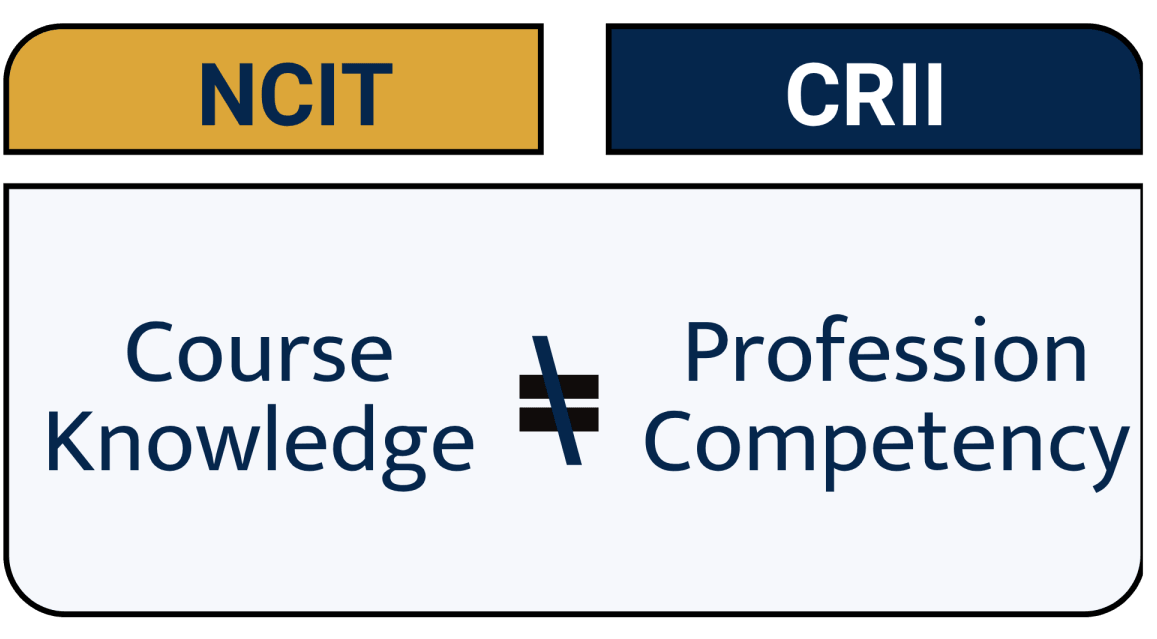
Participants in NCIT Basic complete a defined education and training program and receive a certificate recognizing successful completion of that program. It provides foundational knowledge and skills for regulatory investigators and inspectors.
CRII serves a different purpose.
NCIT Basic recognizes completion of training. CRII recognizes demonstrated professional competence.
Professional certification is not simply another course or the next level of training. Rather, it is an independent, assessment-based credential designed to determine whether an individual has demonstrated the knowledge and competencies required to perform a defined professional role.
CRII is therefore not being developed as an advanced NCIT course or as a certification of what someone learned in NCIT Basic. Instead, the requirements of the profession define what a CRII credential holder must know and be able to do. NCIT Basic is one avenue through which professionals may develop some of that knowledge and competence.
The two programs are complementary. NCIT helps professionals build their knowledge and skills; CRII provides an opportunity to demonstrate professional competence against an established standard.
Why Is CLEAR Developing CRII?
Regulatory inspectors and investigators play a critical role in protecting the public and supporting effective professional regulation. Their work is specialized, and the competencies required to perform it effectively extend well beyond knowledge of a particular law, rule, or agency process.
CRII is being developed to establish a recognized professional standard for regulatory inspection and investigation and provide a meaningful way for individuals to demonstrate their competence.
A professional credential can offer value across the regulatory community:
For practitioners: CRII provides professional recognition and a portable demonstration of competence that can extend beyond a single employer, agency, or jurisdiction.
For employers and regulatory organizations: CRII provides a consistent benchmark for the knowledge and competencies expected of regulatory inspectors and investigators.
For the profession: CRII can contribute to greater consistency and recognition of regulatory inspection and investigation as a specialized professional practice.
For the public: CRII provides additional assurance that individuals holding the credential have demonstrated competence against established professional standards.
Built Around the Real Work of Inspectors and Investigators
CRII is being developed around what regulatory inspectors and investigators actually do.
The credentialing process began with a Job Task Analysis (JTA), bringing together experienced subject matter experts from the regulatory community to identify the tasks, knowledge, and skills that are essential to effective performance in the role.
The JTA has now been completed and validated, providing the foundation for the CRII examination blueprint.
CLEAR also engaged its broader membership in validating the findings. More than 300 regulatory professionals participated in the validation survey, confirming the domains and tasks identified through the JTA process.
This research-based approach is an important part of what distinguishes a professional certification from a training program. Rather than starting with a course curriculum and building an exam around what was taught, CRII starts with the profession itself: What must a competent regulatory inspector or investigator know and be able to do?
The answer to that question guides the credential.
Where We Are in the Development Process
Developing a credible professional certification takes time and requires more than simply creating an examination. CLEAR is following a structured credentialing process involving subject matter experts, validation activities, examination development, and the establishment of policies and procedures for the certification program.
Here's where we are today:
- Job Task Analysis completed and validated: The essential tasks, knowledge, and competencies for regulatory inspection and investigation have been identified and confirmed through research and practitioner input.
- Examination blueprint created: The validated JTA findings have been translated into an examination blueprint that establishes the framework for what the CRII examination will assess.
- Initial item development completed: Subject matter experts have begun developing examination content grounded directly in the validated competencies. More than 360 initial examination questions have been developed through the item-writing process.
- Examination forms next: The next stage is preparing the initial examination forms and moving toward implementation of the certification examination.
- Examination analysis and passing score study ahead: Once the program launches and sufficient examination data are available, CLEAR will be able to conduct the analysis and passing score study necessary to establish the appropriate performance standard.
- Program policies and procedures underway: CLEAR is also finalizing the policies, procedures, and application process that will support administration of the certification program.
Each step is designed to help ensure that CRII is a credible, fair, and meaningful measure of professional competence.
What Comes Next?
As development continues, CLEAR is moving closer to the launch of CRII.
The next stages will include finalizing examination forms, completing the certification program's policies and procedures, and preparing the application process. Following launch, examination data will provide an opportunity to further evaluate the assessment and establish the passing standard through a formal passing score study.
We currently anticipate launching CRII in early 2027.
As with any rigorous professional certification, the goal is not simply to launch quickly. Our priority is to build a credential that is credible, defensible, and meaningful to the professionals and organizations it serves.
A New Professional Standard for Regulatory Inspection and Investigation
CRII represents the next step in CLEAR's commitment to advancing the profession of regulatory inspection and investigation.
For practitioners, it offers an opportunity to demonstrate expertise and gain recognition for the specialized competencies required to perform this work. For regulatory organizations, it can provide a meaningful benchmark for evaluating and developing inspection and investigation professionals. And for the profession as a whole, it can help establish a shared standard of competence across jurisdictions and regulatory environments.
Most importantly, CRII recognizes that regulatory inspection and investigation is a specialized professional practice—and that the people performing this work deserve a credential that reflects the complexity and importance of what they do.
NCIT Basic helps professionals develop the knowledge. CRII provides an opportunity to demonstrate the competence.
We are excited about the progress made so far and will continue to keep the CLEAR community informed as CRII moves toward launch.
CRII is being built by the regulatory community, for the regulatory community—and we look forward to sharing what comes next.